Expert perspectives on oral examinations, AI in education, faculty experiences, and the evolution of academic assessment.
Featured Article
Student Behavior
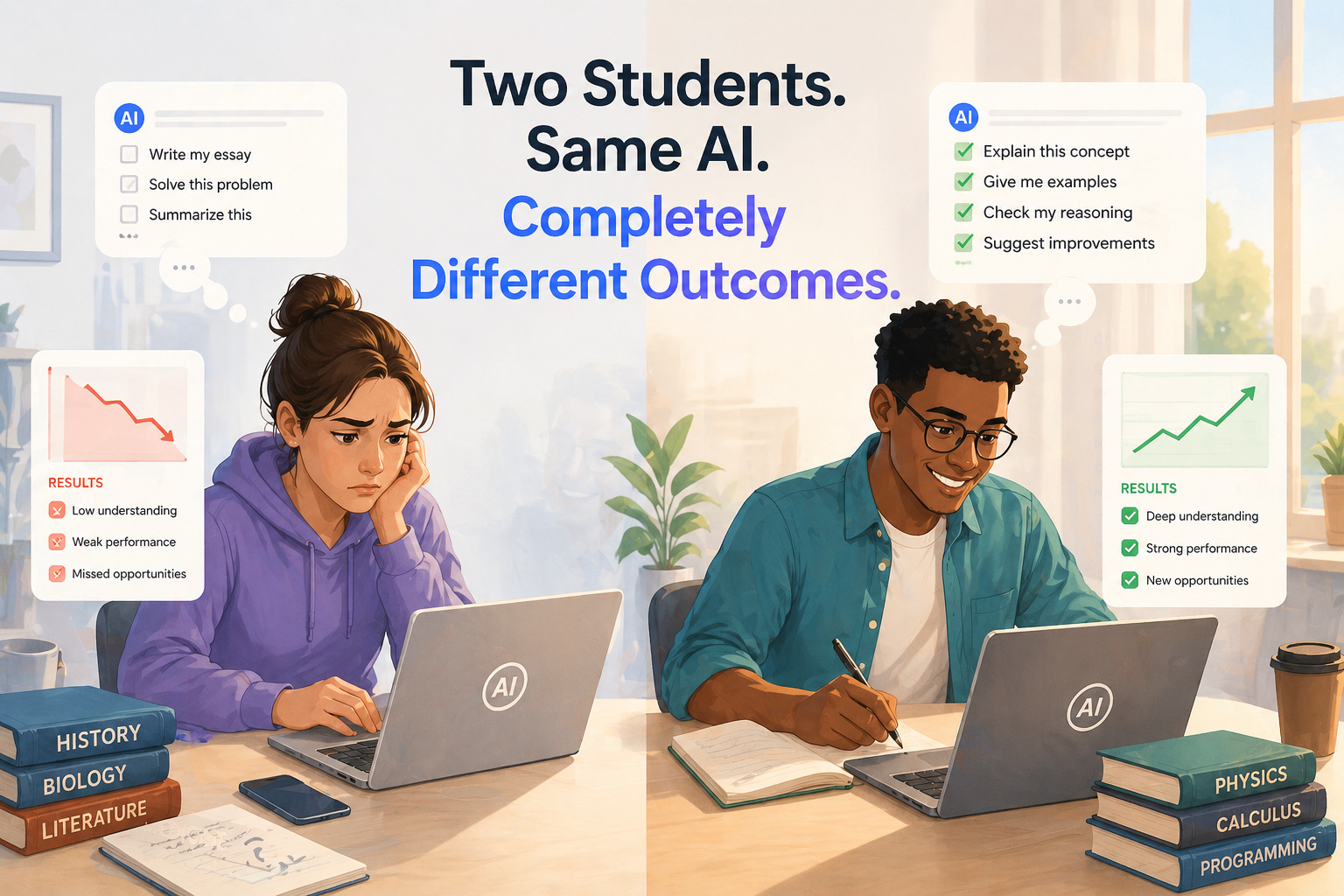
Two Students. Same AI. Completely Different Outcomes.
They had the same assignment, the same tools, and the same deadline. One of them learned something. The other just finished faster. Today, that difference might look small and insignificant. Four years from now, everyone will know the difference.
A detector score is not evidence. Human writing gets flagged, AI writing slips through, and even a perfect detector couldn't tell you what the student actually understands. Here's the better question to ask.
You can't stop every student from opening ChatGPT. You can make it much harder to earn credit without understanding what they submit. Five changes you can make this week.
A traffic-light AI policy communicates expectations. It cannot verify anything. The gap between what faculty can describe and what they can verify is where assessment validity quietly collapses.
No unsupervised take-home exam can be made completely AI-proof. But it can be redesigned so AI cannot replace the evidence you need — without giving up the take-home format.
Public confidence in higher education keeps sliding, and AI can now produce the artifacts degrees were built on. Degrees retain value when they represent capabilities institutions can credibly demonstrate.
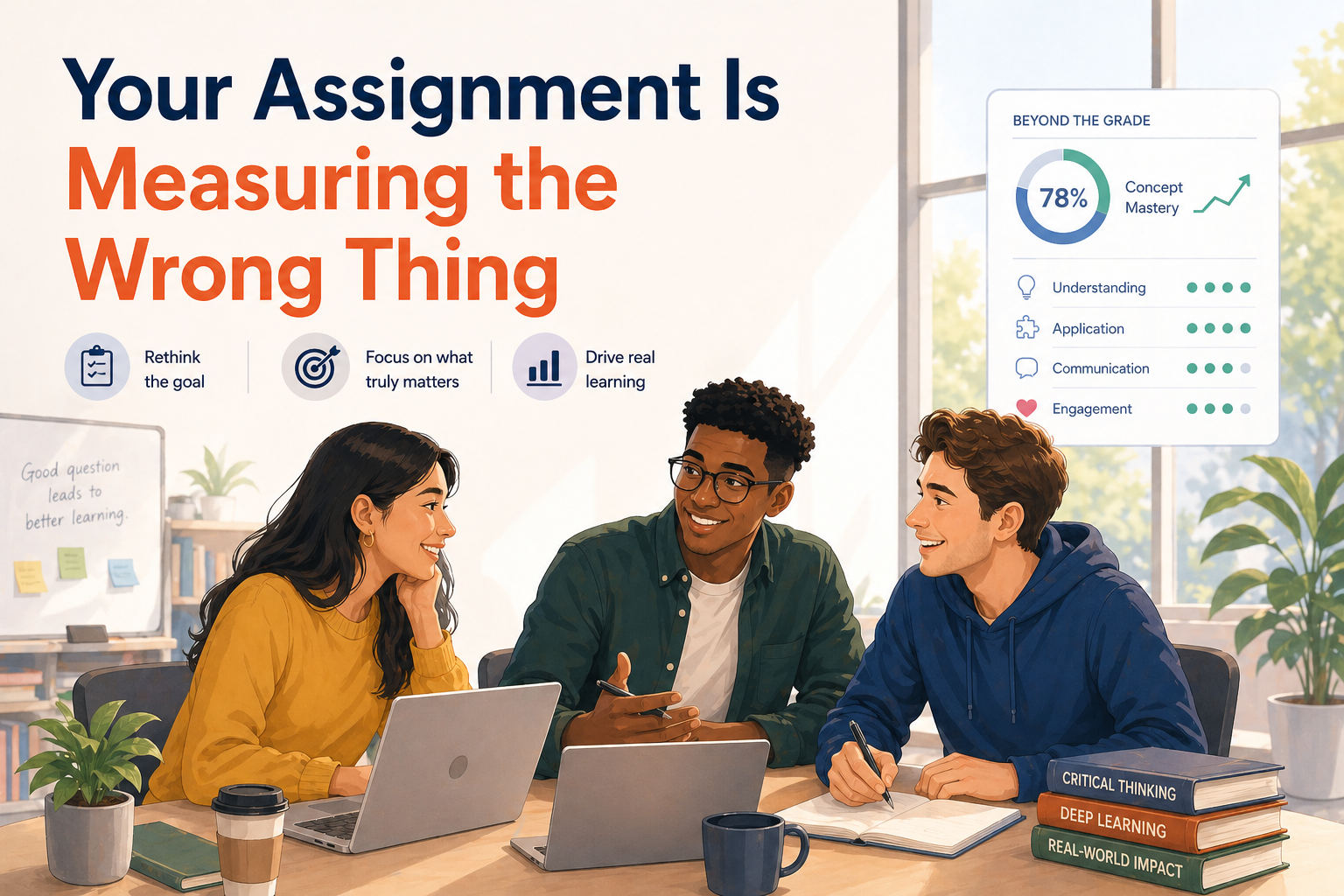
The finished paper was never the point. It was always supposed to be evidence of deeper thinking, reasoning, the messy process of actually working through a hard problem. It stopped being evidence the moment AI could produce it.